Duolingo: what works behind the green owl
Recognition, enjoyment and a system for learning. What brands can learn from the Duolingo Handbook and the 2026 update.
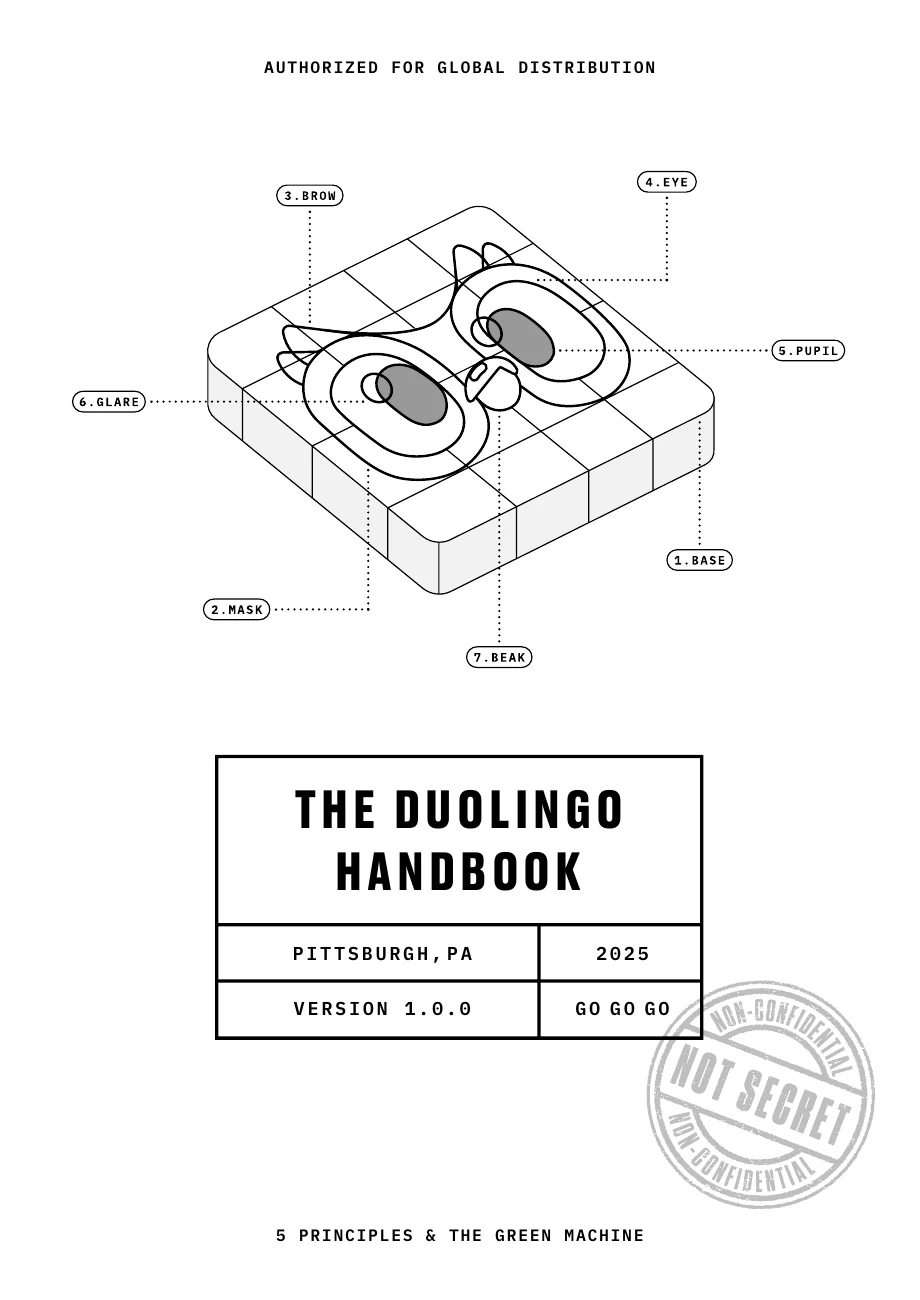
A green owl that chases you when you skip your language lesson. Duolingo is a compelling example of attention-grabbing marketing. But focusing only on the jokes misses how the brand is built. The Duolingo Handbook shows how product, people, experiments and communication reinforce each other.
A recognisable character that can keep surprising us
Duo is more than a mascot beneath a logo. The green colour, the owl's shape, its exaggerated emotions and its unconventional humour form a recognisable world. Within that world, the brand can keep doing something new. That makes the combination interesting: recognition needs continuity, while attention often needs surprise.
For brands, this raises a useful question. Which elements remain recognisable when you remove the brand name? And are those elements given enough time to become familiar? Constantly changing campaign formats may look attractive, but they also ask the audience to learn who is speaking all over again.
Make It Fun starts in the product
The handbook names five principles: Take the Long View, Raise the Bar, Ship It, Show Don’t Tell and Make It Fun. The last principle explains much of the communication. Enjoyment is also part of the learning experience: characters, feedback, small victories and a reason to return tomorrow.
Marketing can therefore build on something users experience themselves. The joke about a strict owl feels familiar to people who receive reminders about their daily lesson. Product and communication speak the same language. That coherence is harder to copy than a witty social media post.
The Green Machine: room for ideas and feedback
Duolingo describes its Green Machine in the handbook. Good people receive a clear definition of success, boundaries to work within and feedback to make better decisions. Ideas are put into practice and refined. What works receives more attention; what does not can stop.
This requires two kinds of discipline. You need to give ideas room to emerge. You also need to assess them without remaining in love with your own invention. A brand can be playful while taking learning seriously. For a marketing team, this might mean defining in advance which question an experiment should answer and what signal would justify further investment.
What the 2026 update adds
The official shareholder letter for the second quarter of 2026, published on 5 August, reports 58.7 million daily active users, 23% more than a year earlier. Duolingo names product improvements, marketing and a one-off Streak Revival initiative as factors behind the growth. The company also describes broader collaboration with creators and further experiments with marketing channels and creative work.
These figures show scale and development. By themselves, they do not prove how much growth was caused by any one campaign, channel or joke. That distinction is essential when using a highly visible brand as an example.
Through the lens of marketing science
At BrandQs, we look at mental and physical availability, in the tradition of the work of Byron Sharp and Jenni Romaniuk. Can people easily think of your brand in relevant buying situations? And can they then easily find, choose and use it?
Duolingo offers an interesting starting point for those questions. The recognisable owl may help people retrieve the brand from memory. A familiar situation — preparing for a trip, returning to a language or seeking a small daily routine — provides a possible starting point for communication. Research is needed to establish how strong those associations actually are; visibility alone cannot tell us.
For a digital service, availability takes shape through discoverability, access to the app and an understandable first experience, among other things. A campaign that sparks curiosity needs to connect with a path people can follow. This is where brand strategy meets product and user experience directly.
What an SME or larger company can do with this
Start with your own brand, customers and usage situations. Copying Duolingo's tone does not automatically create a suitable personality. A healthcare organisation, an industrial service provider and a drinks brand each have a different relationship with their audience.
- Make recognition concrete. Choose which visual and verbal elements you want to build consistently. Research whether people associate them with your brand.
- Connect communication with experience. Align promises and humour with what people actually experience through your product or service.
- Give experiments a question. Test a usage situation, a message or an entry point, for example. Decide in advance how you will learn from the outcome.
- Look beyond platform reactions. Reach and engagement can be useful signals. Also examine brand recognition, consideration, usage and obstacles along the way.
- Preserve what makes the brand recognisable. Give creativity room within a world people come to know.
Distinctive. Relevant. Available.
The combination makes Duolingo interesting. A character of its own helps it stand out. A recognisable human need makes the story relevant. Repeated encounters and an accessible experience make availability tangible. Execution requires collaboration between strategy, creativity, research and product.
Human+AI also fits this way of working: technology can help explore variants and investigate patterns. People remain responsible for direction, the quality of evidence and its meaning for the brand. A large number of ideas is useful only when you know what you want to learn from them.
Would you like to apply these questions to your brand? Let's explore recognition, relevance and availability together.
Sources and context
Published on 29 September 2026. Analysis based on the supplied The Duolingo Handbook (2025, version 1.0.0), particularly its principles and Green Machine, and Duolingo's official Q2 2026 shareholder letter. The cover illustration comes from the supplied handbook. The application to brand strategy is a BrandQs analysis; Duolingo is discussed here as an example, not as a BrandQs client case.
English version of the BrandQs archive. Historical references are preserved.