Is AI a bubble, or the engine of a new industrial super-revolution?
Bubbles accelerate infrastructure, force innovation and select tomorrow’s champions. Nvidia and the hyperscalers build the bridge, while 90% of AI start-ups fall into the ravine. This time, digital liquidity smooths the bubbles: capital continually seeks new peaks and innovation never stops. The real horizon? Superintelligence, robotaxis and air taxis, defence AI, pharmaceutical AI, humanoid robotics, smart cities, and AI for marketing, climate, the brain and finance.
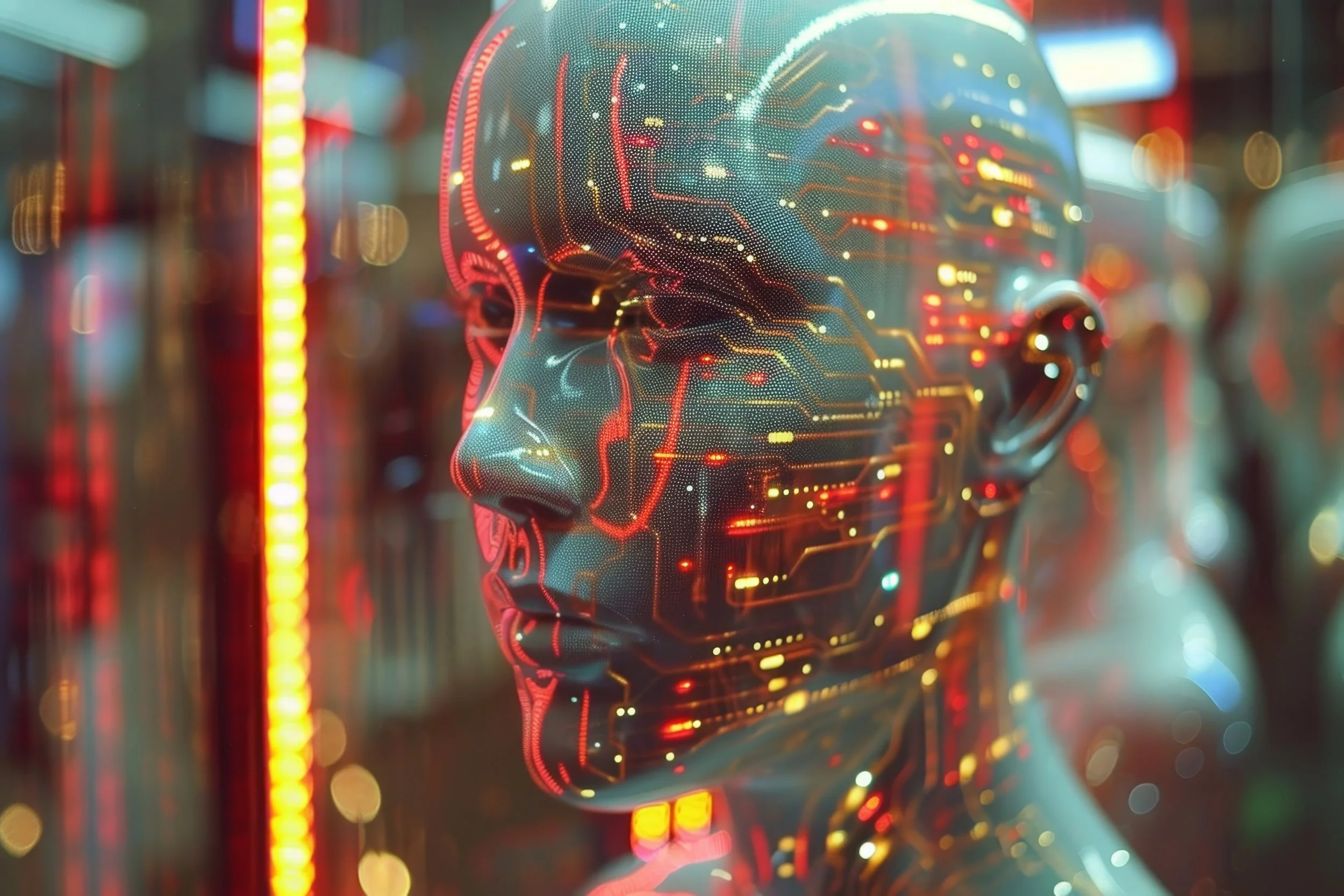
The statement sent ripples through Wall Street. Investors, entrepreneurs and innovators are asking: is AI heading for a dotcom-style disaster? Or are we at the heart of a new revolution?
The short answer: AI is both.
What a bubble really is
A bubble does not mean something is “fake”. It means capital and attention are flowing in faster than the technology can currently deliver.
Investors pour billions into businesses with barely any product-market fit.
Start-ups stockpile servers, chips and talent without clear revenues.
Valuations rise faster than end-user adoption.
Yet this overinvestment is not a mistake. It funds infrastructure, experiments and risks that would never happen in a “rational” capital cycle.
The result: half the businesses fail and investors lose money, but the world gains lasting structures: railways, fibre-optic networks, data centres and GPUs.
Historical bubbles as catalysts
History shows that bubbles are a fast-forward button for progress.
🚂 Railway Mania (UK, 1840s): thousands of kilometres of track were planned and countless companies failed, but the surviving railways became the logistical backbone of the Industrial Revolution.
⛽ Cars and petrol stations (1910s–1920s): hundreds of carmakers emerged and 99% failed. But roads and petrol stations remained, enabling the rise of Ford, GM and later Toyota.
💻 Dotcom (1995–2000): Pets.com disappeared, but Cisco's routers, Amazon's warehouses and fibre-optic backbones laid the foundations for Google, Facebook and Netflix.
The lesson: bubbles accelerate infrastructure rather than simply representing failure.
AI as a fractal innovation cycle
AI fits this pattern perfectly. Its ecosystem develops in layers, or fractals:
Infrastructure – Nvidia, TSMC and Microsoft Cloud. These are today's railway tracks and fibre-optic cables.
Platforms – OpenAI, Anthropic and xAI. Comparable to telegraph companies using railway infrastructure.
Applications – Hundreds of AI start-ups, tools and “GPT wrappers”. Like early carmakers, 90% will disappear.
Consolidation – The phase in which only a few dominant players remain. Think Standard Oil, Ford and Amazon.
Each layer builds on the previous one. The bubble is a necessary phase, not the end.
Nvidia in the eye of the storm
Nvidia is the emblem of this paradox.
🌧️ Contracts keep coming: hyperscalers Microsoft, Amazon and Google sign multibillion-dollar orders; sovereign wealth funds from Saudi Arabia, the UAE and Singapore invest in AI data centres that almost all need Nvidia.
💰 The oxygen of the AI boom: Nvidia's H100, and the B100 anticipated in the original article, are essential for training and inference.
🏦 Even outsiders want in: hedge funds, start-ups and non-technology corporations queue to rent chips.
It recalls Cisco in 1999: enormous demand, real revenue and dominance by one supplier.
But there is a catch:
Many start-ups buying Nvidia chips lack a sustainable business model. If they fail, second-hand hardware could flood the market.
The marginal buyer is often speculative rather than profitable.
Altman's point, as interpreted in this article: the infrastructure layer, Nvidia, TSMC and Microsoft, survives; the application layer is where the bubble bursts.
Altman: “From the perspective of broader investment in AI and semiconductors... I don’t see it as a bubble. The fundamentals across the supply chain remain strong, and the long-term trajectory of the AI trend supports continued investment,” he said.
Wall Street's dilemma
Analysts are divided:
The Next Big Waves, discussed below, represent a trillion-dollar market. The opportunities to upgrade existing applications and build new ones are so vast that an end to AI's rollout is difficult to imagine.
🔴 Bear case: sooner or later supply catches up with demand, prices normalise and margins fall. The current growth rate is unsustainable.
Why Altman says this now
Altman knows better than anyone that AI is real: he is helping build it.
His warning is strategic:
Capital discipline: remind investors that 90% of AI start-ups will disappear. Bring the money to OpenAI rather than new, more marginal players.
Reality check: hype does not equal winners. A crash separates the wheat from the chaff. The implied message: OpenAI is the winner.
Timing: when hype is at its peak, it makes sense to temper expectations and attract investors with “the best” story.
Altman deliberately places AI in the historical trajectory of the dotcom bubble: a reset will come, but it will accelerate growth for the strongest survivors. Coincidentally or otherwise, in his view OpenAI is one of them, with the newly introduced and improved ChatGPT 5 mentioned in the original article. :-)
The geopolitical dimension
AI is also a geopolitical race.
United States: Nvidia is a crown jewel of Silicon Valley and America. The Pentagon and White House see AI as strategic infrastructure.
China: invests heavily in domestic AI chips and platforms despite US export restrictions. The goal is technological sovereignty.
Middle East and Asia: sovereign wealth funds position themselves as energy suppliers to the digital future through data centres.
Bubbles are bridges
AI's road certainly contains bubbles, like any road. The future is alive.
Short term: hype at lower levels, overvaluation, poor offerings and crashes among smaller players, with even companies such as Salesforce worth considering.
Long term: infrastructure, many new applications, consolidation and new champions.
Nvidia sits in a “winner's bubble”: like Amazon after the dotcom crash, it will survive, while some less sensible customers will not.
The real question is not: “Is AI a bubble?”
The real question is: “Who crosses the bridge to the next wave?”
👉 Keep an eye on Nvidia, TSMC and the hyperscalers.
👉 Expect that perhaps 90% of smaller AI application start-ups may disappear. Even businesses such as Salesforce could be overtaken by newer, more intuitive AI systems. Doesn't Salesforce's interface look rather medieval? Alternatively, they must reinvent themselves, often difficult in businesses with many processes, structures and layers of middle management. Who dares make themselves redundant?
👉 Look geopolitically: this is a struggle for digital dominance and the economic future, beyond an ordinary industry.
Digital liquidity makes bubbles different
In the railway and dotcom eras, bubbles were disastrous and temporary, becoming fully visible only after collapse. Today things differ because of:
Constant liquidity: buying the dip has become normal. Active trading and algorithms are always ready.
Continuous innovation: AI is a tide rather than a wave. Every dip offers an opportunity for improvement and innovation.
Market lubrication: large capital flows, real-time data and digital platforms soften sharp peaks and troughs. So much money is being invested in the future that major breakthroughs seem inevitable. Optimism about progress is immense and deeply established.
Although some warn against blindly buying dips, strategy experts and hedge funds emphasise that digital markets can stabilise or recover much faster and develop powerful new strengths.
A new society, geopolitics and technological dominance: the real stakes
Viewing AI solely through a bubble lens is narrow and useful PR for OpenAI. A broader perspective reveals much greater stakes and enormous opportunities.
Strategic foundation: infrastructure is a geopolitical weapon in the technological power struggle between the US and China, rather than a neutral building block.
Capital with an agenda: sovereign funds, defence programmes and state investment drive growth and shape technological sovereignty.
The Next Big Waves: the next breakthroughs sit at the intersection of AI and sector leadership, and will shape our future:
Superintelligence – The move towards AGI and cognitive breakthroughs.
Robotaxis, air taxis and automated data-driven mobility – Self-driving ecosystems as the new oil.
Defence AI – Drones, autonomous weapons and cyber strategy at the centre of power.
Pharmaceutical AI – Rapid acceleration in drug discovery, personalised medicine and sports medicine.
Humanoid robotics – AI gains a physical body, becoming a workforce, toy, domestic helper or employee; more below.
Smart cities – Urban AI ecosystems optimising traffic, energy, safety and services in real time.
Climate AI – Simulations, predictions and automation to restructure energy, agriculture and resources sustainably.
Fintech AI – Autonomous trading, risk models and digital currencies rewriting financial dominance.
Neuralink AI – Brain and bodily stimulation on demand; self-healing, self-learning brains through AI-controlled neural hardware and software. Please be patient: assistance will arrive shortly, with a digital nerve impulse or two.
Marketing AI
…
The future of humanoid robotics looks promising
Advances in AI, sensors and materials are making robots increasingly capable and versatile. They are expected to enter sectors from manufacturing and healthcare to emergency response, improving productivity, safety and efficiency. Although development remains at an early stage, the original article anticipates widespread adoption from the late 2030s, potentially transforming how we live and work.
Technological progress
AI and machine learning:
Humanoid robots are becoming more intelligent, learning from data, adapting to new situations and performing complex tasks.
Sensor technology:
Improved sensors, including multimodal arrays, give robots a fuller picture of their surroundings and enable more effective interaction with the world (OAE Publishing Inc.).
Materials and design:
Lightweight, durable materials and improved joint mechanics increase mobility and dexterity.
Modular design:
Robots increasingly use modular construction, making upgrades and customisation easier (Engineered Arts).
Potential applications
Manufacturing:
Humanoid robots can support complex assembly, quality control and maintenance, improving factory efficiency and safety.
Healthcare:
They could assist with patient care, rehabilitation and even surgery, helping address staff shortages and improve outcomes.
Emergency response:
Robots can enter dangerous environments such as disaster zones or nuclear facilities, reducing human risk and improving interventions.
Services:
In retail, hospitality and logistics, humanoid robots can improve customer service and streamline processes.
Home assistance:
Although development is young, humanoid robots are set to take over more everyday tasks. Imagine a STIHL robot that trims your hedge, sweeps autumn leaves and keeps the lawn perfectly cut. Indoors, robots read the newspaper to grandparents, serve warm tea and remind them to take medication. What sounds futuristic today could become as ordinary as a washing machine or smartphone within a generation.
Economic and social impact
Job losses versus new opportunities:
Some jobs will disappear, while others emerge in robotics development, maintenance and operation.
Leisure service providers, including events and experiences, will become more important.
Higher productivity and efficiency:
Automating repetitive and dangerous tasks can substantially increase productivity.
Addressing labour shortages:
Humanoid robots can play a crucial role in understaffed sectors, particularly physically demanding or dangerous work.
Accessibility and affordability:
Technological progress and falling production costs will make humanoid robots more accessible and affordable.
Some players
Pioneers and icons
Honda (ASIMO): an iconic demonstration of human-like walking and interaction, influential across the industry.
Boston Dynamics (Atlas): outstanding agility and dynamic movement.
Technology giants and newcomers
Tesla (Optimus): aims for mass production and affordability, initially for factories and later homes.
Agility Robotics (Digit): robust, versatile robots for logistics and warehouses.
Figure AI: general-purpose humanoids focused on safety, flexibility and productive deployment.
1X Technologies (formerly Halodi): assistive robots for healthcare, retail and personal support.
Unitree Robotics: affordable humanoid and quadruped robots for research, industry and education.
Sanctuary AI: develops robots with near-human cognitive abilities for broad applications.
Fanuc: industrial precision, with humanoid applications primarily in manufacturing and collaborative robots.
Social and interactive robotics
Hanson Robotics (Sophia): internationally known for realistic facial expressions and conversation, bridging towards emotional AI.
SoftBank Robotics (Pepper and NAO): focused on retail, healthcare, hospitality and education.
PAL Robotics (REEM, TIAGo and TALOS): Barcelona-based maker of versatile robots for retail, research and healthcare.
Engineered Arts (Ameca): human-like expressions, interaction and development platforms.
Specialists and niche innovators
Mimic Robotics: teleoperation and robots reproducing human movement in real time for surgery and dangerous environments.
Intuitive (Da Vinci): transformative surgical robotics, humanoid precision without a human-like appearance.
English version of the BrandQs archive. Historical references are preserved.