Lotus Bakeries: from local business to global icon (1985–2024)
Founded in 1932 in Lembeke, Belgium, Lotus Bakeries grew from a modest family business into a global player in the FMCG sector. Known for its iconic caramelised biscuits, Lotus Biscoff, the company combined traditional values with innovative marketing strategies and ambitious international expansion. This article analyses its evolution from 1985 to 2024, focusing on strategic decisions, marketing initiatives and their impact on business results.

Introduction
Founded in 1932 in Lembeke, Belgium, Lotus Bakeries grew from a modest family business into a global player in the FMCG sector. Known for its iconic caramelised biscuits, Lotus Biscoff, the company combined traditional values with innovative marketing strategies and ambitious international expansion. This article analyses the evolution of Lotus Bakeries from 1985 to 2024, focusing on strategic decisions, marketing initiatives and their impact on business results.
1. 1985–1999: consolidation and the first international steps
In the late 1980s, Lotus Bakeries remained firmly rooted in the Belgian market. Its focus was on product diversification within the biscuit category. This period also brought its first international expansion, with exports to neighbouring countries such as the Netherlands and France.
Strategic initiatives:
Consolidating its position in the Belgian market.
Introducing new products such as cakes and waffles.
Launching its first export initiatives in Western Europe.
Marketing focus:
Traditional advertising campaigns built around family moments and togetherness.
Positioning Lotus as synonymous with quality and Belgian tradition.
2. 2000–2010: the Biscoff breakthrough and international ambition
The real breakthrough came with the rebranding of speculoos as Lotus Biscoff for the international market. Its distinctive flavour and texture were positioned around “the cookie with coffee”.
Strategic initiatives:
Rebranding as Biscoff for the US and UK.
Strategic partnerships with airlines such as Delta Air Lines, significantly increasing international visibility.
Acquiring local biscuit producers in Scandinavia and the UK.
Marketing highlights:
“The Cookie with Coffee” campaign: creating a strong association with coffee occasions.
Using sampling through hospitality venues and airlines to introduce consumers to the product.
Strong visual brand consistency worldwide.
3. 2010–2020: acceleration and diversification
Lotus Bakeries accelerated its international growth, focusing on the US and Asia. The company also expanded into new categories, including healthy snacks.
Strategic initiatives:
Establishing subsidiaries in the US, China and South Korea.
Launching Biscoff Spread, a major hit in the US.
Acquiring natural snack brands such as BEAR and Nakd, responding to growing demand for healthy food.
Marketing innovations:
Digital marketing campaigns aimed at millennials.
Social media activations with food influencers.
Positioning Biscoff Spread as a versatile ingredient for desserts and breakfast.
4. 2020–2024: sustainability and global market leadership
The focus shifted towards sustainability and further geographical expansion. Lotus invested heavily in reducing CO2 emissions and in sustainable packaging.
Strategic initiatives:
Investing in sustainable production facilities, such as the new US factory.
Further expansion in Asia and Latin America.
Strategic partnerships with major coffee chains worldwide.
Marketing strategy:
Launching the “Biscoff Planet” campaign, focused on sustainability.
Localising marketing strategies by region while preserving core brand values: Lotus adapts its campaigns to each market's cultural context while maintaining authenticity and quality. In the US, the emphasis is on Biscoff's versatility in desserts, while in Asia the focus is on its distinctive taste experience. In Europe, traditional coffee occasions take centre stage, often in collaboration with local coffee shops.
Data-driven marketing: using AI and data analysis for personalised campaigns. Advanced analytics tools enable Lotus to predict consumer behaviour, create targeted advertising and increase customer engagement. This allows the brand to create tailored marketing campaigns that respond to individual preferences and purchasing behaviour.
Social media initiatives
Lotus Bakeries has established a strong social media presence, particularly on platforms such as Instagram, YouTube and TikTok.
TikTok campaigns: Lotus Biscoff inspired a new generation by promoting creative recipes, from Biscoff milkshakes to Biscoff cheesecakes. The viral #BiscoffCreations challenge reached millions of users, driving a substantial increase in brand awareness and sales.
Influencer marketing: collaborations with food influencers and baking enthusiasts around the world, demonstrating innovative ways to use Biscoff products.
User-generated content: encouraging customers to share their own recipes and creations, strengthening community and brand loyalty.
Conclusion
Lotus Bakeries evolved from a local Belgian player into a globally loved brand. Consistent brand positioning, smart marketing and strategic acquisitions helped the company secure a distinctive place in the FMCG market. Its combination of tradition, innovation and sustainability is central to its continued success.
In a future article, we will explore another leading Belgian company: Duvel Moortgat.
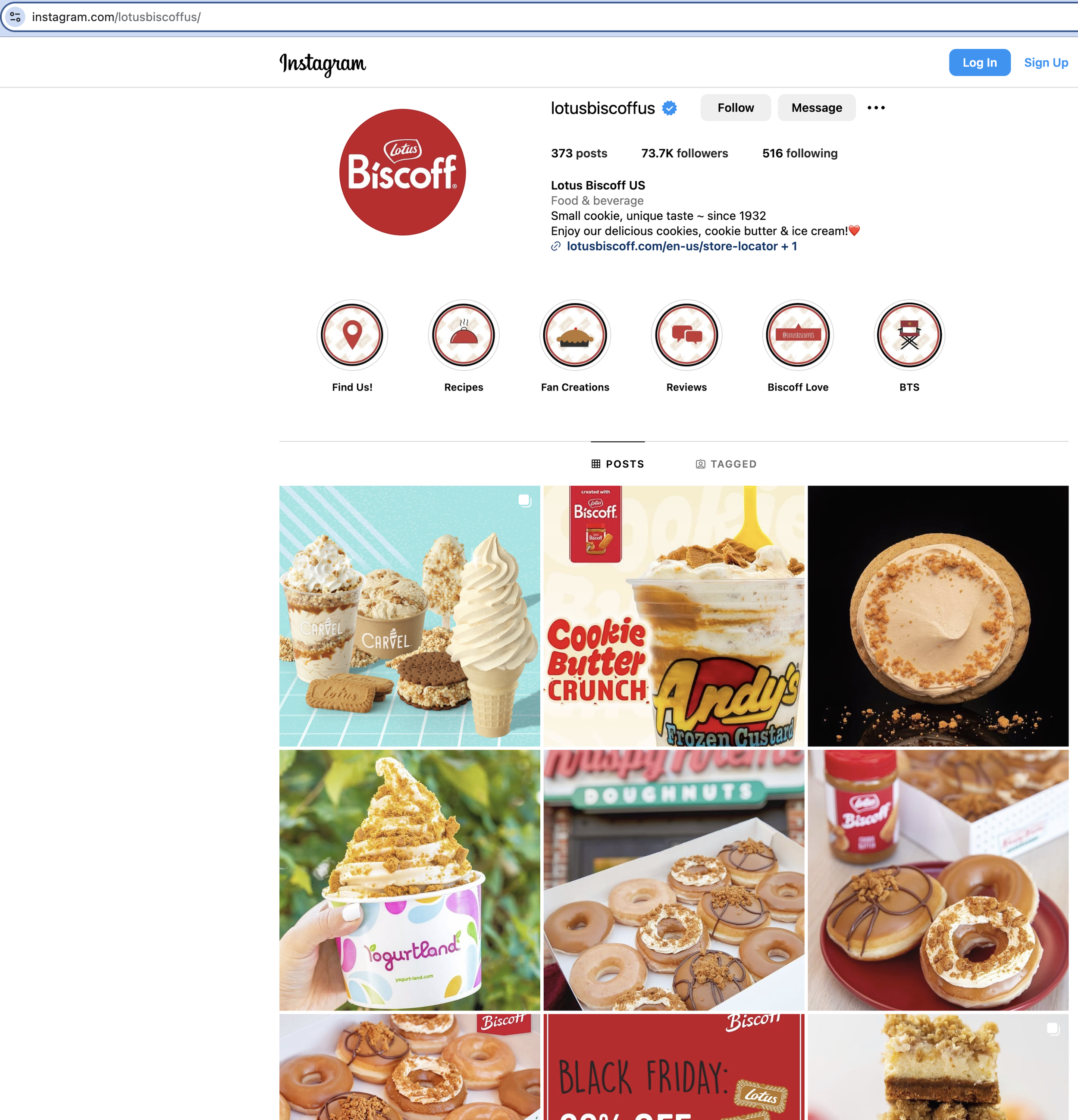
A taste of Lotus Biscoff US: cookies, cookie butter & ice cream!


English version of the BrandQs archive. Historical references are preserved.