From data to action: how AI and robots could shape the future of trade marketing
From data to shelf action, fully automatically. Imagine AI analysing sales and category data, then sending robots to refill shelves, position displays and adjust promotions in real time. Explore a future of trade marketing where data directs and executes. Yeah, yeah…
Imagine selling a product through hundreds of shops. You have data on sales, stock levels, shelf positions and promotional results. But what is actually happening on the shelves?
What if you could analyse those data and automatically turn them into action, before a merchandiser even starts the car?
Welcome to AI-driven trade marketing, where intelligent systems decide what needs to happen in-store and execute it through autonomous retail robots.
Data analysis is only the beginning
The system starts by collecting real-time data:
Sales by SKU, hour and shop.
Category performance against benchmarks.
On-site stock levels.
Internal and competitor promotions.
Point-of-sale camera footage and shelf scans, through shelf cameras or robot vision.
Display locations and secondary placements.
AI then interprets these data using predictive models:
An imminent stockout?
A promotion performing too slowly?
A new SKU without the right facing?
A competitor dominating eye level?
The system detects it and issues a concrete action within seconds.
Robots on the move. Or moving robotic shelf components?
After decades of collecting and analysing data, a new era in retail and trade marketing is emerging: the liquid shopfloor. An environment where everything, from shelves to promotions, becomes fluid, responsive and self-directing.
No field teams making corrections weeks later. No promotional material left up long after a campaign ends. No stockouts noticed only after the shop has lost sales. Instead, AI uses real-time category and sales data to coordinate a fleet of intelligent systems:
Autonomous robots, in-store or stationed nearby
Replenish shelves based on AI-predicted demand.
Reconfigure displays, facings and point-of-sale material in real time.
Send shelf audits and photographic reports directly to manufacturers and the retailer's headquarters.
Smart shelving units
Shelves that rearrange, refill, change colour or move themselves based on shopper behaviour.
Shelf talkers and promotional tags that use dynamic rails to appear, change colour or size, and disappear automatically.
LED shelves showing different visuals for each SKU depending on the time of day, weather, stock or consumer.
Self-configuring drone robots
Drones or modular units that replace or add point-of-sale material without human intervention.
Rearrange displays and promotions based on traffic flows, including nearby areas and car parks, weather forecasts, time of day, news or campaign updates.
Respond to voice commands from shop staff or AI instructions, such as “move Corona Extra to the endcap”.
More about robots here: https://humanoidroboticstechnology.com
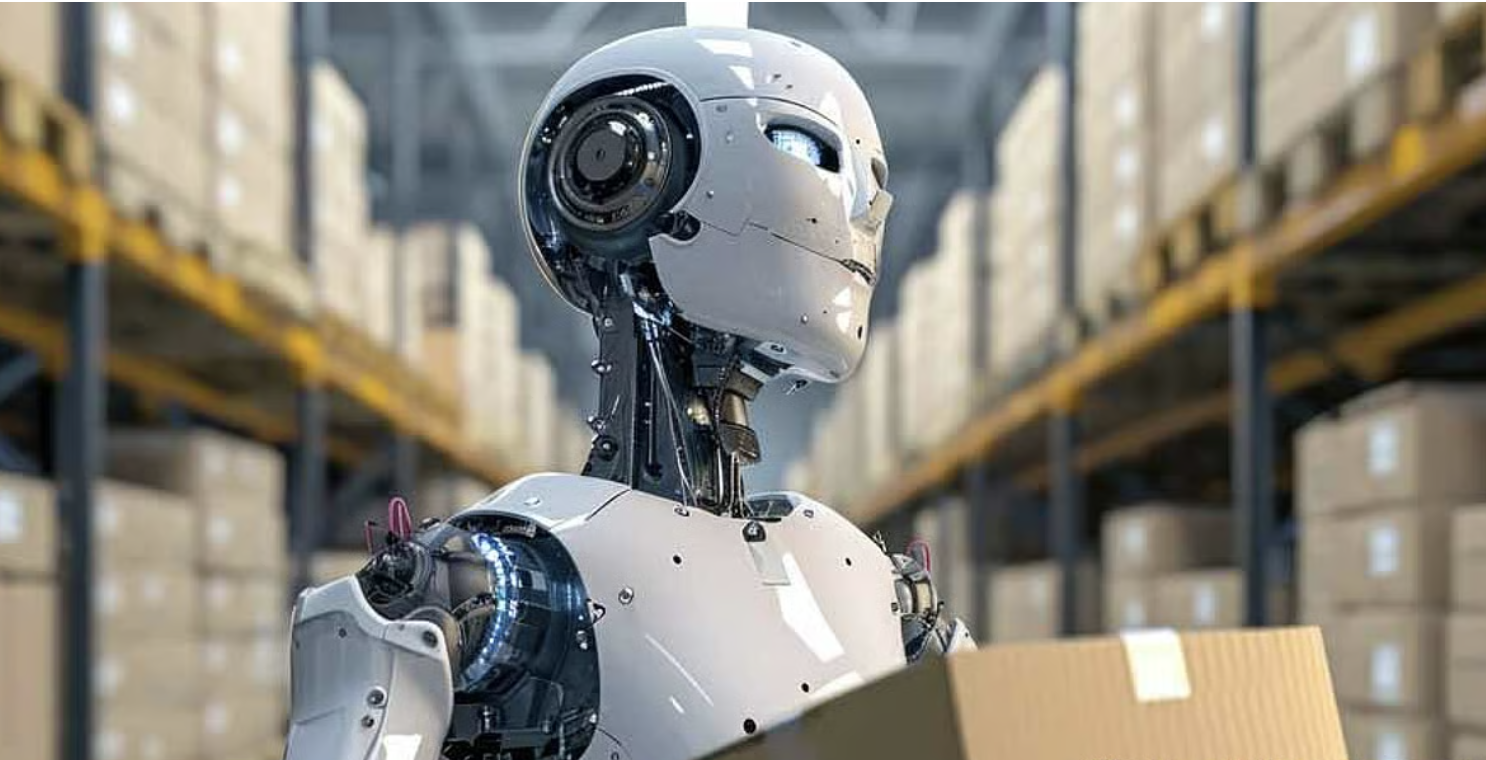
Unitree Robotics, a Chinese manufacturer based in Hangzhou, offers a robot for around €5,000. It recently launched the R1, a humanoid robot with 26 joints, voice recognition and visual recognition. Order it here
Dynamic category management at a granular level
Instead of static quarterly planograms, the system uses live category intelligence:
Shelf layouts adapt by hour, day and shop.
Promotions are automatically stopped or expanded based on ROI.
Pricing is dynamically optimised at shelf level.
New products automatically receive greater visibility when initial uptake is strong.
Underperforming SKUs are phased out without meetings.
It is like giving every shop its own category manager and field team, working around the clock, without errors or lunch breaks.
Intelligent infrastructure: shop, basement warehouse and HQ form one living system
In the next generation of retail, the boundaries between shop floor, stock and headquarters disappear. The entire infrastructure becomes a self-learning ecosystem, connecting every layer, from the eye-level facing to the automated truck making the next delivery.
Below the shop floor: the intelligent basement warehouse
Under each shop sits an automated micro-warehouse, a local buffer between central stock and the shelf. It is equipped with:
Autonomous lifts and shuttles carrying products from the basement to the shelf.
Real-time inventory monitoring, directly connected to shelf data.
Inbound and outbound goods flows that organise themselves without human intervention.
As soon as a SKU's stock falls below a critical threshold, the system automatically triggers replenishment from the basement and, if needed, further upstream from headquarters.
The HQ warehouse is also a shop
A distinctive feature of this architecture is that the central warehouse also functions as a flagship store or experience-led shop:
It is both a distribution centre and a data hub: local shops continuously feed headquarters insights on behaviour, traffic, stock turnover and promotional impact.
For example, new products are tested here in a live environment and automatically distributed to local shops when successful.
Operating its own shop keeps HQ aligned with the reality of shopper behaviour, while saving space and increasing distribution.
Headquarters and local shops maintain a permanent two-way connection, exchanging goods, insights, improvements and adjustments.
Everything moves, everything learns
The result is infrastructure where every shelf change, promotion and stock level is adjusted automatically and contributes to the whole system's learning.
The liquid shopfloor is therefore more than a smart shelf or box-moving robot: it is a living retail machine whose layers communicate, predict and act together.
From trade marketing to retail orchestration
What we call merchandising today becomes tomorrow's automated ecosystem, where AI and robotics make the difference between margin pressure and market dominance.
You no longer need an army of field representatives. You need an intelligent ecosystem that translates data into action and action into revenue.
What does this mean for brands?
For manufacturers, distributors and retailers, it means:
Greater on-shelf availability → more sales
Faster correction of errors and shortages
Less dependence on human supervision
Real-time adaptation to shopper behaviour
Lower merchandising and field-visit costs
Better compliance with retailer agreements
A distant vision, or possible tomorrow?
Many parts of this technology already exist:
Shelf-scanning robots, such as those from Bossa Nova and Simbe.
AI analytics for retail data, including NielsenIQ, Trax and Symphony.
Point-of-sale integrations with retail media.
Smart displays with moving elements.
Self-reconfiguring shelving, being tested by Amazon and Alibaba.
What is missing? The overarching orchestration layer: an AI system bringing analysis, decision-making and execution together.
Automated mental and physical availability: AI competes for attention and reach
In a world where every touchpoint matters, increasing mental and physical availability becomes an automated bidding contest at scale, fuelled by real-time sales data and contextual triggers, rather than a manual creative exercise.
The shop is just one touchpoint. The AI ecosystem therefore operates on the shop floor and across the wider environment surrounding it.
Mental availability: AI competes to be top of mind
Mental availability, a brand's ability to be remembered at the right moment, is optimised autonomously.
Imagine:
An AI algorithm knows purchase intent for a brand peaks between 4 pm and 6 pm.
The system automatically buys hyperlocal online advertising, including YouTube pre-rolls, Waze, Spotify and Instagram Stories, based on traffic data near the shop.
The creative format adapts automatically to weather, an event or traffic congestion, for example: “refresh yourself after a long working day”.
Retailers and manufacturers bid against one another in real time for visibility just before the buying moment.
Physical availability: where you are visible matters
Physical availability becomes dynamic and situational. AI decides:
Which bus shelter or digital billboard within 300 metres of the shop currently offers the greatest value for increasing conversion.
Whether a relevant festival nearby attracts shoppers from the target audience.
Which in-car advertising channels, such as screens in shared vehicles or navigation systems, can be triggered by proximity to a point of sale.
How a self-driving shopping cart or robotic display should change its route to intercept traffic near a busy entrance.
AI looks at who is already there and predicts who will arrive next, aligning both shelves and outdoor advertising accordingly.
Retailers and brands bid against each other in real time
What is planned today through media rollouts or annual contracts becomes continuous data-driven bidding:
Retailers automatically bid for out-of-home advertising space to attract shoppers with exclusive promotions.
Manufacturers automatically buy real-time visibility on the shop floor and around it, on screens, festival signs, charging stations or even wearables.
Local context determines price: visibility beside a summer bar at 30°C? Three times more expensive than on a rainy day.
The result is an environment where brands and shops continually compete on relevance and proximity, directed by AI.
Mental and physical availability merge
A circular system emerges, in which each touchpoint directly influences the next:
An advertisement on Spotify triggers a visit.
The shop recognises the profile and adjusts shelf talkers and product placement.
The purchase feeds back into the ecosystem, which targets new lookalike audiences nearby.
This goes beyond an omnichannel strategy. It is auto-channel orchestration, where each channel organises itself around real conditions, data and intent.
The liquid shopfloor is only the beginning
The real breakthrough is how AI integrates mental and physical availability into one intelligent ecosystem that:
Observes, learns and predicts.
Positions, communicates and acts.
Optimises for speed, proximity, relevance and ROI.
This is the future of trade marketing: an intelligent competitive strategy between ecosystems, rather than simply a process.
And naturally, all of this benefits from human creativity, which helps machines perform at their best. See, for example, the Harvard Stitch Fix case.
See also: https://www.tiktok.com/@jakevsthestate/video/7574256744726154503
Ready to prepare your category for the future?
At BrandQs, we help you explore how to prepare trade marketing, field execution and category management for the future, through intelligent architecture and clear business impact.
Want to know how your brand can prepare for this wave of automation today?
Let's go!
Make it stand out
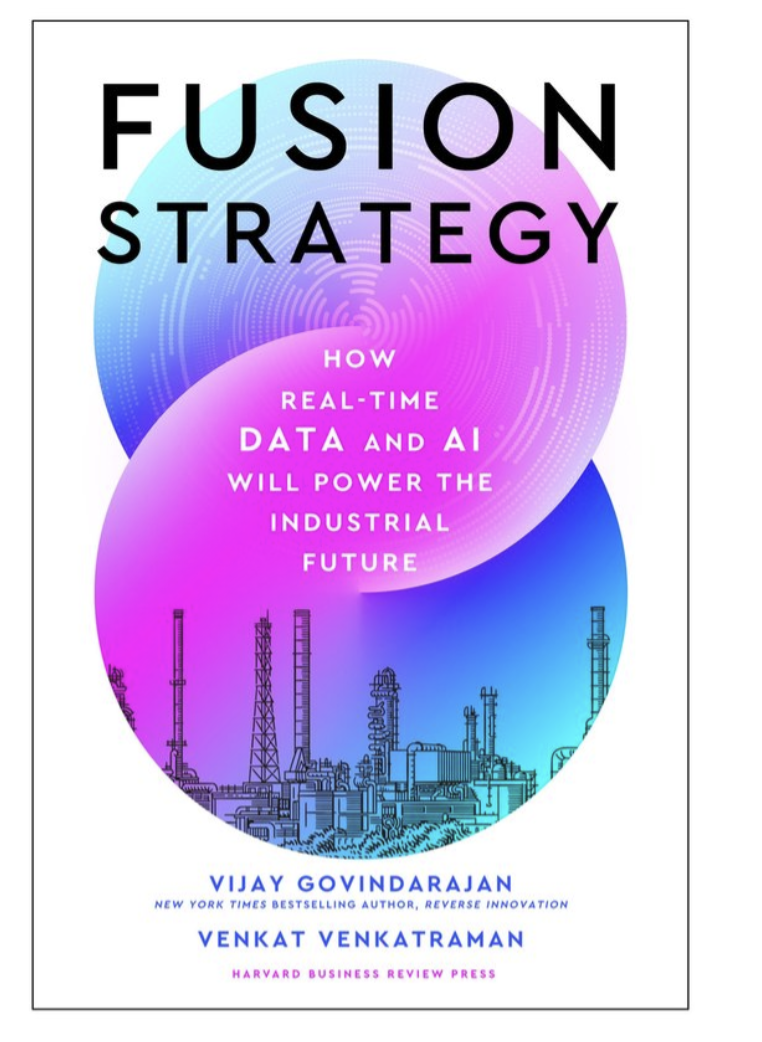
See also the book Fusion Strategy
Two world-renowned experts in innovation and digital strategy explore how real-time data and AI will radically transform physical products and the businesses that make them.
Technology giants such as Facebook, Amazon and Google can collect real-time data from billions of users. For businesses that design and manufacture physical products, this fluid, data-rich information long seemed out of reach. Inexpensive, powerful sensors, supercomputers and artificial intelligence are now changing that rapidly.
In Fusion Strategy, innovation expert Vijay Govindarajan and digital strategy specialist Venkat Venkatraman present a roadmap for industrial businesses. It combines their strength in creating physical products with digital companies' expertise in using algorithms and AI to analyse vast interconnected datasets, revealing strategic connections that would otherwise be impossible.
The rules of competitive advantage are changing: success goes to those with the strongest data-driven insights rather than simply the most valuable assets. To compete in the new digital era, businesses must use real-time data to accelerate products, strategies and customer relationships. Those that do not risk ending up on the wrong side of the next major digital divide.
Fusion Strategy shows the way forward.
English version of the BrandQs archive. Historical references are preserved.